Thursday, September 5, 2013

Noisy Classroom? Read These Tips...


One day, in front 36 riotous sophomores, I clutched my chest and dropped to my knees like Sergeant Elias at the end of Platoon. Instantly, dead silence and open mouths replaced classroom Armageddon. Standing up like nothing had happened, I said, "Thanks for your attention -- let's talk about love poems."
I never used that stunt again. After all, should a real emergency occur, it would be better if students call 911 rather than post my motionless body on YouTube. I've thought this through.
Most teachers use silencing methods, such as flicking the lights, ringing a call bell (see Teacher Tipster's charming video on the subject), raising two fingers, saying "Attention, class," or using Harry Wong's Give Me 5 -- a command for students to:
  1. Focus their eyes on the speaker
  2. Be quiet
  3. Be still
  4. Empty their hands
  5. Listen.
There is also the "three fingers" version, which stands for stop, look, and listen. Fortunately, none of these involve medical hoaxes.
Lesser known techniques are described below and categorized by grade bands:

How to Quiet Kindergarten and Early Elementary School Children

Novelty successfully captures young students' attention, such as the sound of a wind chime or rain stick. Beth O., in Cornerstone for Teachers, tells her students, "Pop a marshmallow in." Next she puffs up her cheeks, and the kids follow suit. It's hard to speak with an imaginary marshmallow filling your mouth.
An equally imaginative approach involves filling an empty Windex bottle with lavender mineral oil, then relabeling the bottle "Quiet Spray." Or you can blow magic "hush-bubbles" for a similar impact.
Teaching Chick places quiet critters on every desk. If a child becomes noisy, she moves the critter to the edge of his or her desk. "If I see them talking again, I will take their quiet critter." Kids still possessing their critters at the end of an activity get their name added to a reward chart.
If you want to go electronic, check out Traffic Light by ICT Magic, which is simply a stoplight for talkers. Other digital methods include the Super Sound BoxClass Dojo, or the Too Noisy App -- an Apple and Android tool that determines noise level and produces an auditory signal when voices become too loud.

Late Elementary and Middle Grade Attention Getters

Back when I taught middle school students, I would announce, "Silent 20," as a way to conclude an activity. If students returned to their seats and were completely quiet in 20 seconds, I advanced them one space on a giant facsimile of Game of Life. When they reached the last square (which took approximately one month), we held a popcorn party.
One of the best ways to maintain a quiet classroom is to catch students at the door before they enter. During these encounters, behavior management expert Rob Plevin recommends using "non-confrontational statements" and "informal chit-chat" to socialize kids into productive behaviors, as modeled inPlevin's video.
Two approaches for securing "100 percent attention" are modeled in a short video narrated by Teach Like a Champion author Doug Lemov -- a minimally invasive hand gesture and countdown technique ("I need two people. You know who you are. I need one person . . . ").
Another idea is to use a content "word of the week" to signal that it's time for silence. Examples: integer, renaissance, or circuit.

Quieting High School Students

Sometimes, rambunctious high school classrooms need a little longer to comply. In An ELT Notebook article, Rob Johnson recommends that teachers write the following instructions in bold letters on the chalkboard:
If you wish to continue talking during my lesson, I will have to take time off you at break. By the time I've written the title on the board you need to be sitting in silence. Anyone who is still talking after that will be kept behind for five minutes.
The strategy always, always works, says Johnson, because it gives students adequate warning.
Another technique, playing classical music (Bach, not Mahler) on low volume when learners enter the room, sets a professional tone. I played music with positive subliminal messages to ninth graders until they complained that it gave them headaches.

Call and Response

Below is a collection of catchy sayings that work as cues to be quiet, the first ones appropriate for early and middle grade students, and the later ones field tested to work with high school kids.
Teacher says . . . Students Respond with . . .
Holy . . . . . . macaroni.
1, 2, 3, eyes on me . . . . . . 1, 2, eyes on you.
I’m incredible . . . . . . like the Hulk. Grrrrrr. (Kids flex during the last sound)
Ayyyyyyyyyyyyyyyy . . . . . . macarena.
I get knocked down . . . . . . but I get up again, you're never going to keep me down.
Oh Mickey, you're so fine . . . . . . you're so fine, you blow my mind -- hey Mickey.
The only easy day . . . . . . was yesterday. (A Navy Seals slogan)

Implementation Suggestions

For maximum effect, teach your quiet signal and procedure, as demonstrated in these elementary and high school classroom videos. Next, have kids rehearse being noisy until you give the signal for silence. Don't accept anything less than 100 percent compliance. Then describe appropriate levels of noise for different contexts, such as when you're talking (zero noise) or during a writing workshop (quiet voices), etc.
If a rough class intimidates you (we've all been there), privately practice stating the following in an authoritative voice: "My words are important. Students will listen to me." Say it until you believe it. Finally, take comfort in the knowledge that, out of three million U.S. educators who taught today, two or three might have struggled to silence a rowdy class.
How do you get your students' attention?

Sunday, July 21, 2013

Teach A Lesson Without Grounding Your Kids

First, you don't just "remove punishment." Once you aren't punishing, kids feel safer, so the emotions they've been stuffing come pouring out -- sometimes in the form of rudeness toward parents. You need to replace the punishment with a positive connection with you, so your child respects you and WANTS to follow your rules.
Transitioning to positive parenting can be hard. Your child has already come to understand the world through a certain lens. He thinks the only reason to "behave" is that otherwise he'll be punished by losing a privilege or being grounded. Of course, you'd rather have him choose to do the right thing because he wants to have a positive impact on the world, not because he's afraid of being caught and punished. But how do you teach him the lessons he still needs to learn, if you no longer use punishment to motivate him?
Grounding your child, removing privileges, punishing with extra chores -- all of these approaches are meant to "teach a lesson."  But research shows that kids get preoccupied with the unfairness of the punishment, instead of feeling remorse for what they did wrong. The lessons you want to teach, I assume, are:
  • His actions have an impact on the world.
  • He can always choose his own actions and he is responsible for them.
  • Everyone makes mistakes. When we make a mistake, it is our job to repair things.  Cleaning up messes is usually harder than making a more responsible choice to begin with.
  • When we reflect on our actions and their impact on the world, it helps us make a better choice next time.
  • It takes courage to do the right thing. But when we make responsible, considerate choices, we become the kind of person we admire, and we feel better about ourselves.

Right? Here's how.
1. First move yourself from anger into empathy. Once your child knows you're on his side, he feels safe to engage with you. Without that sense of safety, your child's heart is hardened to you -- because he expects judgment and punishment -- and you have no influence at all. So just tell him you need some time to think, and get calm before you talk about what happened.  
2. Start with connection. Children of any age, including teenagers, respond to that connection by being more open to your guidance. If your child is worried about you getting upset at her, she'll move into "fight, flight or freeze" and learning will shut down.  She's also more likely to lie. The only way to actually "teach a lesson" is to create a safe conversation. To do that, remember that your child has a reason for what she did. You may not consider it a good reason, but to her it's a reason. If you don't find out her reason, you can't prevent a recurrence.
3. Tell your child you want to hear his thoughts about what happened.  Then let him talk. Reflect to clarify (and demonstrate) your understanding:
"I see...so the guys really wanted you to play basketball, and it was at the same time as the study session for the test? That's a hard choice."
"Wow! So you and your sister were really furious at each other... you were so hurt when she....I would have been mad too, if someone said that to me......and you really wanted to get back at her, huh?"
4. Keep your focus on connecting with your child and seeing the situation from his point of view. This helps you, and him, understand what motivated him. This gives him an opportunity to work through the feeling or the unmet need that drove his behavior. Kids always know what the right choice was, but something got in their way. What was it? How can he (with your help) address that so he can make a better choice next time?
For instance, let's say he played basketball with his friends instead of going to the study session, and then failed his test. You might find as you talk with him that he has a lot of anxiety about being accepted by the guys and felt he had to play basketball to be one of the gang. This social anxiety may be something he actually needs your help to sort out and problem-solve about, and once he does he'll be a lot more ready to focus on schoolwork.
But by simply punishing him, you would never have even known about it. You would have lost the opportunity to help him address his feelings and find a good solution for next time. In fact, since punishment doesn't help him resolve his conflict, he might very well do the same thing next time, but invent some story to cover himself.
5. Ask open-ended questions.  Keep the conversation as safe and as light as possible. If you can share a laugh, you'll defuse the tension and strengthen your bond, so remind yourself that this is a growth experience for both of you, and summon up your sense of humor.
  • Was he aware of making a choice? 
  • What led him to that choice? 
  • What does he think about it now? ("How did that work out for you?")
  • Was there a cost to making that choice? 
  • Would he do it again? 
  • Why or why not? 
  • How could he support himself to choose differently next time?
  • What support would he like from you, so he can choose differently next time?

6. Empower your child to repair what he's "broken." Explore and learn with your child, rather than assuming that you know what should happen now. Once he isn't being controlled by that unmet need or upsetting feeling, and he sees the result of his action (failed test, hurt sister, broken window, whatever), he feels regretful.  This is only after the feelings or needs have been processed, of course.  But once they aren't driving him, his "goodness" is free to come through.  He naturally wants to make things better.
So you ask him:
  • What can you do now to make things better?
  • Did this incident show you anything in your life that you want to change, that's bigger than this one incident?
  • How can I support you? 

7. Resist the urge to jump in with punishments. Instead, be quiet and listen.  This is not about him being punished and losing privileges and being told what bad things are now going to happen to him. It's about him realizing that what he does has an impact, and taking responsibility to have a positive rather than a negative impact. If you can avoid playing the heavy, your son can actually take responsibility, because he isn't on the defensive.
In the example of the failed test, maybe he makes a written chart about schoolwork, and sits with you to do it every night, and asks the teacher for extra credit work to do, etc. Is that punishment? No, not if this is the plan that he brainstorms with you to come up with. In fact, if you help him actually follow through and partner with him so he can achieve his goals, then it's completely empowering and could transform his ability to achieve in school.  Of course, he might not know that this is what he needs to be successful. Sometimes, you'll make the choice to give him this support, not as a punishment, but because your job as a parent is to provide the structure to help him succeed.
If the bad choice was hurting his sister, then the reparations would be to her.  All children have mixed emotions about siblings, but that means there is affection and comradeship in there somewhere, and even protectiveness. "How can you help your sister feel safe with you again?"
8. What if she says no repair work is necessary; that she doesn't care if she failed the test and her sister deserved what she got?  She's still on the defensive.  Say "Oh, Sweetie....I understand why this happened and why you made this choice....but that doesn't mean your choice worked out well...you must still be very upset to say that....I know that when you aren't so upset you would feel differently....Let's give this a break and talk more later." Give her a chance to calm down.  
When you start talking again, start with empathy. That's what helps her heal those feelings. And model taking responsibility, maybe by saying "I think some of this is my fault...I didn't realize you were falling behind in class, or I would have helped you address it before now." Set a clear expectation that she needs to come up with a repair with her sister, and that you know she will figure out the perfect thing.
9. Step into your own power. You as the grown-up have more power than you know in this situation. Your child is depending on your leadership, even if she seems to be resisting it. If she hurt her sister, it gives you an opportunity to address the obvious sibling rivalry. If she failed her test, it gives you an opportunity to consider your family's overall prioritization of schoolwork, and how YOU can support your child to manage it. When we give our children sufficient support, they usually rise to the level of our expectations.  Some kids just need more support than others.
10. Set limits as necessary. If your child has broken a family rule, then you'll need to reinforce that rule.
  • "Homework always comes first, before play." 
  • "In this family, we use our words to tell each other when we're upset about something. We don't hit."

11. Don't rescue. Sometimes your child's infraction goes beyond the family. He was caught cheating at school, or drinking with his buddies, or he was in a car accident. Resist the temptation to rescue him from the consequences of his actions. If you do, he will learn nothing from this incident. That's a set-up for him to repeat the behavior that led to this result. Instead, listen, empathize, and love him unconditionally. But be very clear that he has to pay the price for his behavior. If that means failing the course at school, or working to repair the car and not being allowed to drive it, that's the natural consequence of his behavior. Much better for him to suffer the pain now and learn something, while he's a minor.
12. Expect an adjustment period. Like any transition, a change in your parenting from punitive to empathic parenting will include both of you learning the new territory. No blame.  We all do the best we can as parents. But if you've been punishing, your child was obeying out of fear. Once you stop punishing, she stops obeying. So you need to make it your highest priority to do some repair work on your connection, FIRST, so she WANTS to cooperate with you, and doesn't want to disappoint you. Otherwise, she'll just flaunt your rules.
But what if she just can't regulate herself to stop fighting with her sister or do her homework?  This is where you pay the piper for your previous punishing -- it's likely she has some big upsets stored up that are driving her behavior. The key is to stay empathic and not take it personally. Remind her that you speak with respect to her, and that you expect civility in return: "You must be so upset to speak to me that way...What's going on, Sweetie?"  Stay compassionate.  Welcome her upset feelings. The more safety you can provide, the sooner your child will be willing to cry and share what's really bothering her. Once she empties her emotional backpack of all those uncomfortable feelings she's been lugging around, she'll be much more open to connecting. And because you've stayed compassionate, she'll know you're on her side, and she'll WANT to cooperate, whether she's three or thirteen. She'll even start thanking you for your patience!
The hard part is changing your own habits, but luckily you'll see positive changes very quickly so you'll have incentive to keep going. Don't worry about changing your child's thinking. If you change, they change.

Sunday, December 9, 2012

School Attendance Matters!!!

In my school counseling program, I have enjoyed doing attendance small group sessions.  My students have really enjoyed the activities and seem to get the big picture of why regular school attendance is so important.
The small group meets six times.  Each year, I use attendance data to form the group and include it as part of my ASCA National Model Plan for the school year.  For the past two years, I’ve worked with third graders.  The selected students usually have 15+ absences from the previous school year.
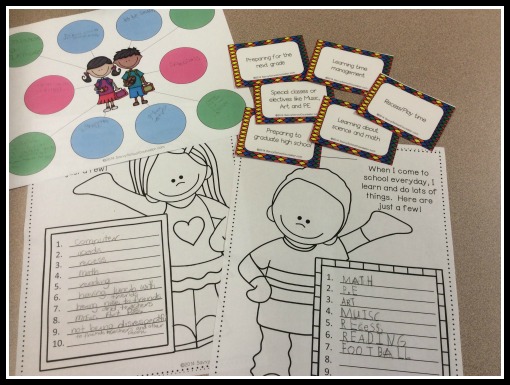
During our first session, the students brainstorm reasons why school attendance matters.  This year, I had them brainstorm on their own sheets first.  I used discussion cards to help students who couldn’t think of enough ideas for their sheets.  While we discussed the different ideas, they were free to add them to their own lists.  We concluded by filling in the bubble chart together.
Session one- School Attendance Matters Group - Savvy School Counselor
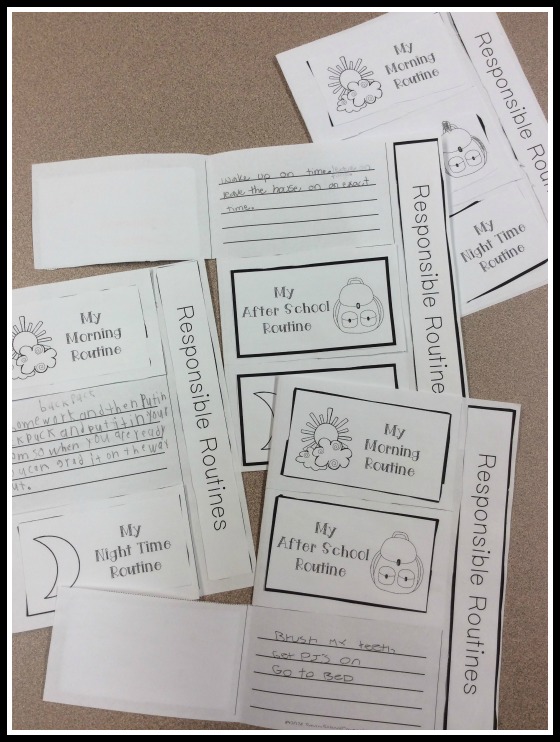
For the second session, the students made a foldable.  Inside, they wrote about Responsible Routines. After assembling the foldable with the labels, they wrote under each flap giving responsible routines for the morning, after school and at night.  This includes routines such as waking up on time to get to school, having everything ready for the next day the night before and going to bed at a decent hour.
Responsible Routines Foldable - Attendance Matters - Savvy School Counselor
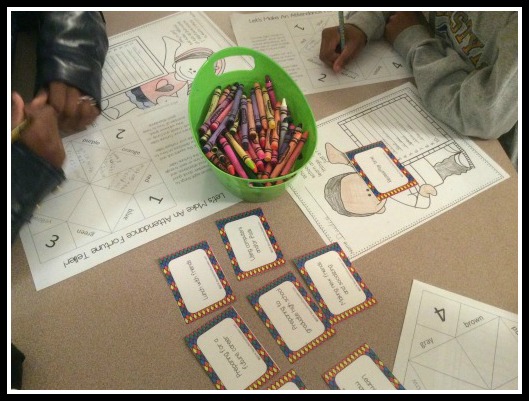
When we met for the third session, the students watched two videos about the importance of school attendance.   One video is an attendance rap and the other shows the staff at a school, along with students, talking about different reasons why it’s important to attend school regularly.  While watching, they write points from the videos that stand out to them. Afterwards, the group members share their notes. Next, we begin making  a fortune teller using information shared by the group along with the brainstorming sheets from the first session.
IMG_1259
IMG_1258
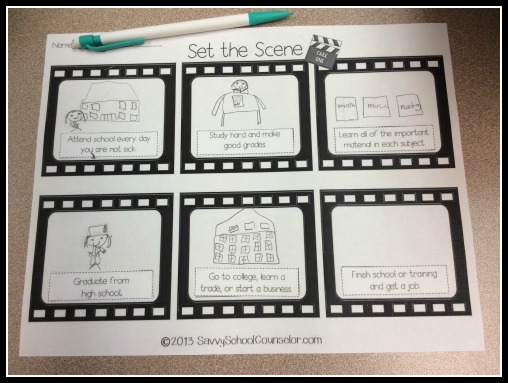
Our fourth session involves finishing the fortune tellers and completing the  “Set the Scene” activity.  “Set the Scene” allows us to discuss the path from good attendance in school to a career.  The students cut out, sequence and glue six strips in order and illustrate each on the filmstrip sheet.
Attendance Fortune Teller- Savvy School Counselor
Attendance Fortune Teller - Savvy School Counselor
"Set the Scene" - School Attendance Matters - Savvy School Counselor
During the fifth session, we play an attendance board game.  This game  includes questions about the information from the first four sessions. If there are any activities that students need to finish from previous meetings, time is allowed during this session.
When we meet for our final session, we play Roll and Respond.  Students roll a die and respond to sentence starters about attendance. Before leaving, they complete an exit ticket which reflects what they’ve learned during the small group.  They take all of their completed activities with them to share with their teachers and families.  
After we have completed the small group, I continue to keep up with the attendance patterns of each of the students when I meet monthly with the attendance committee at my school.  I will also meet again with the students to review what was learned in our small group.  Individual sessions are held with students who continue to have attendance concerns.  The good news:  This year’s attendance data for the group is looking good and is much better than what they ended the school year with last year!

Friday, October 12, 2012

The High Cost of Childcare


A single mom of twins, Angie LaPort can't wait until next fall.  That's when her days of paying for full-time childcare will end.  For four years, LaPort's children attended a Kindercare center full-time.  Ms. LaPort was happy with the care her children received; but at $1400 per month, she could only make it work with the financial assistance of a family member.

"We were so fortunate to get help with childcare expenses from my grandfather, but he, too, had expenses to take care of,"  says LaPort, who works full-time, and attends classes at a community college.  When her grandfather could no longer afford to help out, Angie needed a more affordable option for childcare and started looking at other options.  In the end, Ms. LaPort made arrangements with two different stay-at-home-moms that she trusts to watch her children on different days.  LaPort admits that it's a complicated schedule; however, for now, it's the best choice for her family.

Like Angie, many parents struggle with the cost of childcare, as well as finding a schedule that works.  The cost of full-time, center-based childcare for an infant is nearly half (49 percent) the median annual income for single mothers, and 39 percent for a preschooler, according to the 2013 brief, Child Care Affordability.

Childcare affordability seems to be a concern regardless of ones family situation. With an average childcare cost of $13,756 annually per infant, and $10,723 per preschooler, center-based childcare can be a huge burdon on many family.


Why Are Costs So High?

Childcare professionals are not highly paid, but costs remain high due to several different factors.  Childcare is a labor-intensive industry due to required staff-to-child ratios.  These ratios range from one teacher for every five children through one teacher for every ten children depending upon the child's age.  Consider the cost of those ratios compared to an elementary school classroom or college lecture class.

Another reason is that full-time childcare programs must typically be open for 11 or 12 hours per day in order to accommodate working families.  In order for chlidcare programs to operate, they must be staffed with enough qualified teachers to cover all of their operating hours.

Additionally, for-profit businesses usually pay a higher property tax than residential properties.


Alternatives To Childcare

Many families have discovered that, regardless of quality care and/or changes to the system for assistance, full-time childcare just doesn't fit their current life situations. Therefore, they seek out alternatives, which require a myriad of differing sacrifices.

"Although I always wanted to stay home with my children, the fact that one or the other of our salaries would just go to day care meant it wasn't much of a choice anyway,"  says Michelle Little.  Ms. Little stays home and adds to her income by doing in-home childcare for two other children providing less expensive care for working moms that need it.

For Jennifer DeVine, a Certified Registered Nurse Anesthetist, her work schedule of 12 to 14 hours per day is the primary factor that keeps her from using childcare centers.  With a husband that travels and no extended family in town Jennifer says, "Daycare just isn't an option for us, as they open too late and close too early.  We have relied on nannies to keep afloat in the childcare arena.  So far, we have been extremely fortunate; but we are starting to search for another nanny since we are moving across town, and the commute will be too much for our current nanny."

Nanny costs can vary based on the amount of time needed, the needs of the family and children, and the experience and education levels of the nanny; but these costs are even more expensive than childcare centers.  The average cost of a nanny is approximately $14.00 per hour, but can go as high as $30 per hour.

For Christy Driver, the main motivation for transition from full-time work with a child in day care to being a stay-at-home-mom was more about reducing stress than cost.  "My employer was asking for more hours; and it was really difficult to pump at work.  At the end of the day, I really missed my baby,"  Christy says.  Ms. Driver made it work by cutting back on the grocery bill and clothing expenditures for herself. Though she knows firsthand that staying home is certainly stressful in different ways, Christy firmly believes it's the best decision for her family at this time.  Christy states, "I am able to run errands during the day when there is less traffic; and I have more flexibility when family comes to visit."


The Cost of Leaving Work

Christy Driver, in addition to many other parents who have left their career for a time in order to be home with their children, often worry about the ability to keep up their professional skills.  "The part that scares me is that I know I want to go back to work eventually; and I don't know how to keep up with technology in my field," Driver says.  "I'll be older and out-of-date.  I wonder if I'll be able to find anything, or if I'll have to go back to school."

This, of course, is a valid concern, and taking years off work does affect women financially in the long run.  While a reduction paid work may make economic sense for women at a single point in time, if does depress women's lifetime earning potential.  This, in turn, can hinder their capacity to support themselves in retirement.  Research suggests that access to work/family supports, including reliable childcare and health insurance, increases women's earnings and job attachment, particularly for lower-waged women.

If you decide to leave the workforce for a while, there are many resources for parents when they are ready to return.  One such resource, www.irelaunch.com, is dedicated to helping people successfully re-launch their careers.  Another site, tentiltwo.com, focuses on placing people who might not have extended school hours childcare in part-time jobs that accommodate the school hours of their children.

Rachel Saunders, head of communications for Opportunity Now, encourages parents to remember that being at home with kids develops new skills that can help in a career.  Saunders states, "Being at home with kids develops your people skills, your creative problem solving, your ability to multi-task, and your time management like no job I've ever had...You should approach ever job with your head held high."

Regardless of the childcare choices you make for your family, it's absolutely worth it to spend some time researching your options.  You might find a situation you had previously not considered that is a better fit for your current life stage.

Kristine Kilgour, M.Ed., LPSC
School Counselor & Mediator
gracecoachingandmediation@gmail.com


Sunday, September 30, 2012

Changing The Way You Come Home To Find Afternoon Delight For You And Your Kids!


We’ve all been there. It starts with that blissful moment of reuniting with your children at school after being apart for the day. Hugs, smiles, news to share; and yet, the minute you get home, it all seems to fall apart. 

No matter how much I psyched myself up for the afternoons and being with my children, many days I wondered if we had some sort of toxin in the house that infused my kids with crankiness upon arrival home. 

Over the years working with families, I heard this same story over and over. Well, at least I wasn’t the only one. Misery loves company, I know; but really, I was beginning to dread this time of day at times. I knew that feeling meant it was time for a change; and, the solution to this problem was strikingly simple: we needed to change the way we came home.
Drum roll please….
First thing upon arriving home from the school and work day, spend 15 minutes of uninterrupted time connecting with your children. Leave your phone in the other room, and let your children direct the play. It will change your entire evening.Why It Works

Much like the 
mismatch of needs that can happen at bedtime, often our goals upon arriving home are much different from those of our children. They have been looking forward to seeing you after being separated, and they want your attention. They want to share their day with you, they want to play, and they want your FULL UNDIVIDED ATTENTION.
What about our goals at that time of day? Once you cross the threshold, you are a parent on a mission. Mail needs to be opened, homework needs to be done… laundry… dinner…baths...the list goes on and on. You barely get started on your first task, and your children have already requested an entire list of things. The next few hours become a series of requests from the kids, us telling them to wait a second, us getting distracted in the next task, and by dinnertime, there have been several meltdowns, including some of your own. Does this sound familiar?

They want all of you, you are trying to accomplish all of the tasks that need to happen so that you can eat, sleep, rinse and repeat. Match made in heaven? I think not.


The Results Are In

Within days of shifting the way we came home, afternoons begin to look much brighter to me. 
I found out that when children get what they need, even in small doses, they are actually quite sane, wonderful little people. I don’t mean their "needs" for ice cream, video games and you as their personal butler. I am talking about their need to connect.

At the heart of it, we all need to know we belong, we matter, and our presence is worth noticing. What’s interesting, is that we don’t need a whole lot of it. We just need a little bit to settle in and transition from the outside world of chaos to the safety of home and family. Our kids have been separated from us all day, and all they want is us. It’s pretty flattering, given how much we mess up with this whole parenting thing sometimes.

I have shared this strategy with many of the families I have worked with, and all have found the same result. Spend 15 minutes really being present, really being engaged with your child, and I promise that you will be amazed at how easily you can sail through your own tasks. The real benefit is not just an easier time getting your stuff done, but a happier, more connected family.

Who’s In?

I know change is hard; but the very best way we can teach our children to try something new is to model it ourselves. 
As we are transitioning in to the new school year, why not take the opportunity to shift the afternoon disaster to afternoon delight? I challenge you to try it out for one week. We can’t wait to hear how it shifts your day, your evening, and your family. 

Kristine Kilgour, M.Ed., LPSC
School Counselor & Mediator
6636 West William Cannon Drive, Suite 1627
Austin, TX  78735
512-704-5265

Sunday, September 23, 2012

Quick Tips For Writing Effective College Application Supplements


While often left as one of the final steps in the application development process, individual school supplements play an important role in helping college admissions officers understand how and why you may be a strong fit for their college.  It may very likely be the only opportunity for you to directly articulate the connections between what each school has to offer and what you are looking for in a college.  With this said, it is important to make your school supplements personal, detailed, and as specific to each school as possible.

Here are a few additional tips to consider as you develop your school supplements:
  • be clear about your own interests and goals within that particular school
  • try to go beyond the generalities of a school (e.g., location, size, liberal arts college, etc)
  • make your key points personal to you, including as many specific details as you have room for
  • do your research about each school
  • maximize your use of available words (no need for introduction, summary sentences, etc)
  • reference a visit and/or campus conversation, when relevant
  • proofread before submission
  • have your school counselor, college & career counselor, and parents read before submitting

Kristine Kilgour, M.Ed., LPSC                                                                                                                       School Counselor & Mediator                                                                                                                            512-704-5265                                                                                                                                              gracecoachingandmediation@gmail.com