Showing posts with label Elementary School. Show all posts

Sunday, March 22, 2015

FLOW: A Brain Break By GoNoodle

Flow by GoNoode- SavvySchoolCounselor.comI was thrilled to learn about a great brain break website called Go Noodle.  This site offers a variety of awesome, free brain breaks to use with children.  Included is their newest brain break, FLOW, which focuses on student mindfulness and stress release.  After creating my free account and checking out Flow, I was excited as I thought of the great ways to use this tool in my school counseling program.
End-of-Year Testing time is a great opportunity to use FLOW.  Many students, especially third graders who are testing for the first time, experience some anxiety about doing well on their tests.  FLOW includes meaning activities to assist students with managing stress and maintaining the confidence they need to be successful.  It can also be an excellent tool to use with individual students who come to your office feeling angry or worried.  The activities in FLOW can be used for whole class lessons, small group sessions or individual counseling.
Here’s how you can get started:
Create an account. (It’s FREE!)  You will be asked to enter the following information:
Create An Account
Once you complete this step, you will have access to the free brain breaks.  You will need to create a class or you may use the demo class.  Simply click on the purple “+New Class” button, name your class and add the number of people in the class.
FlowClass
 Once your class is added to the list, you may click your class link and select a classroom champ avatar.  The longer you and your students use GoNoodle, the bigger your class champ will become.
Classroom Champ
start screen2


Click the green PLAY button to enter the brain break menu.  Click on the FLOW link, and you are ready to begin!
gonoodle3
Once you have entered FLOW, you may select a grade level.  I tried it using both Kindergarten and 5th grade, and I did not see a difference in the videos.  You will select one of the two categories (Attitude or Stress) to begin.
Grade Level Selection
Category Selection


The background sounds in all of the activities are very relaxing.  Students have the option of closing their eyes or keeping them open and watching the screen.  The screen gives visuals of everything being described throughout the activity.
The ATTITUDE option includes two activities:  Chin Up and Weather the Storm.
Chin Up talks students through shifting their moods.  This is an excellent activity for students needing to calm down whether they are angry or worried.  It is a very relaxing activity which includes head tilting and raising and lowering of the chin.
Weather the Storm is a great visual for students who are going through a difficult time.  During the activity, the students watch as a small tree weathers a storm but remains strong and standing when the storm passes. (Love it!)
gonoodle11
gonoodle12


The STRESS option also includes two activities:  Bring it Down and On & Off.
Bring it Down is great for helping students to bring down stress.  Students imagine a balloon high in the sky.  They imagine slowly pulling the string on the balloon until they can hold the balloon between their hands.  Finally, they imagine letting it go as they watch it fly away in the air.
On & Off involves managing stress by making parts of the body tense and then letting go to relax.  Students will turn on the energy in their toes, legs, hands, arms and whole body.  When the energy is ON, the screen brightens up almost like the sun is in the center.  When students turn their energy off, the screen becomes dark.
gonoodle13
gonoodle14
gonoodle15


I am so excited to learn about this great tool to use in school counseling.  There are other great games you can try like “To the Maximo” where students perform stretches and poses to help with relaxation as well.
If you’d like to TRY OUT FLOW, you may follow any of the links in this post to get started or click on "TRY OUT FLOW" above.
GoNoodle- New brain break FLOW- SavvySchoolCounselor.com

Saturday, November 29, 2014

Interest Inventories In The Classroom

Interest Inventories In The Classroom & School Counselor's Office

Picture


Rather than choosing rewards for your students, ASK them what they are motivated by. Some children are able to verbalize this, while others need options.

The interest inventory above is one example.


Picture

At Intervention Central, you can find "Jackpot!" This is a simple program that allows you to create your own interest inventory.

The reward categories include:
Academic Activities
Adult Attention
Edible Items
Escape
Non-Academic Activities
Peer Attention
Tangible Items


Kristine Kilgour, M.Ed., LPSC
School Counselor, Education Consultant, Mediator
512-704-5265


Thursday, September 5, 2013

Noisy Classroom? Read These Tips...


One day, in front 36 riotous sophomores, I clutched my chest and dropped to my knees like Sergeant Elias at the end of Platoon. Instantly, dead silence and open mouths replaced classroom Armageddon. Standing up like nothing had happened, I said, "Thanks for your attention -- let's talk about love poems."
I never used that stunt again. After all, should a real emergency occur, it would be better if students call 911 rather than post my motionless body on YouTube. I've thought this through.
Most teachers use silencing methods, such as flicking the lights, ringing a call bell (see Teacher Tipster's charming video on the subject), raising two fingers, saying "Attention, class," or using Harry Wong's Give Me 5 -- a command for students to:
  1. Focus their eyes on the speaker
  2. Be quiet
  3. Be still
  4. Empty their hands
  5. Listen.
There is also the "three fingers" version, which stands for stop, look, and listen. Fortunately, none of these involve medical hoaxes.
Lesser known techniques are described below and categorized by grade bands:

How to Quiet Kindergarten and Early Elementary School Children

Novelty successfully captures young students' attention, such as the sound of a wind chime or rain stick. Beth O., in Cornerstone for Teachers, tells her students, "Pop a marshmallow in." Next she puffs up her cheeks, and the kids follow suit. It's hard to speak with an imaginary marshmallow filling your mouth.
An equally imaginative approach involves filling an empty Windex bottle with lavender mineral oil, then relabeling the bottle "Quiet Spray." Or you can blow magic "hush-bubbles" for a similar impact.
Teaching Chick places quiet critters on every desk. If a child becomes noisy, she moves the critter to the edge of his or her desk. "If I see them talking again, I will take their quiet critter." Kids still possessing their critters at the end of an activity get their name added to a reward chart.
If you want to go electronic, check out Traffic Light by ICT Magic, which is simply a stoplight for talkers. Other digital methods include the Super Sound Box, Class Dojo, or the Too Noisy App -- an Apple and Android tool that determines noise level and produces an auditory signal when voices become too loud.

Late Elementary and Middle Grade Attention Getters

Back when I taught middle school students, I would announce, "Silent 20," as a way to conclude an activity. If students returned to their seats and were completely quiet in 20 seconds, I advanced them one space on a giant facsimile of Game of Life. When they reached the last square (which took approximately one month), we held a popcorn party.
One of the best ways to maintain a quiet classroom is to catch students at the door before they enter. During these encounters, behavior management expert Rob Plevin recommends using "non-confrontational statements" and "informal chit-chat" to socialize kids into productive behaviors, as modeled inPlevin's video.
Two approaches for securing "100 percent attention" are modeled in a short video narrated by Teach Like a Champion author Doug Lemov -- a minimally invasive hand gesture and countdown technique ("I need two people. You know who you are. I need one person . . . ").
Another idea is to use a content "word of the week" to signal that it's time for silence. Examples: integer, renaissance, or circuit.

Quieting High School Students

Sometimes, rambunctious high school classrooms need a little longer to comply. In An ELT Notebook article, Rob Johnson recommends that teachers write the following instructions in bold letters on the chalkboard:
If you wish to continue talking during my lesson, I will have to take time off you at break. By the time I've written the title on the board you need to be sitting in silence. Anyone who is still talking after that will be kept behind for five minutes.
The strategy always, always works, says Johnson, because it gives students adequate warning.
Another technique, playing classical music (Bach, not Mahler) on low volume when learners enter the room, sets a professional tone. I played music with positive subliminal messages to ninth graders until they complained that it gave them headaches.

Call and Response

Below is a collection of catchy sayings that work as cues to be quiet, the first ones appropriate for early and middle grade students, and the later ones field tested to work with high school kids.
Teacher says . . . Students Respond with . . .
Holy . . . . . . macaroni.
1, 2, 3, eyes on me . . . . . . 1, 2, eyes on you.
I’m incredible . . . . . . like the Hulk. Grrrrrr. (Kids flex during the last sound)
Ayyyyyyyyyyyyyyyy . . . . . . macarena.
I get knocked down . . . . . . but I get up again, you're never going to keep me down.
Oh Mickey, you're so fine . . . . . . you're so fine, you blow my mind -- hey Mickey.
The only easy day . . . . . . was yesterday. (A Navy Seals slogan)

Implementation Suggestions

For maximum effect, teach your quiet signal and procedure, as demonstrated in these elementary and high school classroom videos. Next, have kids rehearse being noisy until you give the signal for silence. Don't accept anything less than 100 percent compliance. Then describe appropriate levels of noise for different contexts, such as when you're talking (zero noise) or during a writing workshop (quiet voices), etc.
If a rough class intimidates you (we've all been there), privately practice stating the following in an authoritative voice: "My words are important. Students will listen to me." Say it until you believe it. Finally, take comfort in the knowledge that, out of three million U.S. educators who taught today, two or three might have struggled to silence a rowdy class.
How do you get your students' attention?

Sunday, December 9, 2012

School Attendance Matters!!!

In my school counseling program, I have enjoyed doing attendance small group sessions.  My students have really enjoyed the activities and seem to get the big picture of why regular school attendance is so important.
The small group meets six times.  Each year, I use attendance data to form the group and include it as part of my ASCA National Model Plan for the school year.  For the past two years, I’ve worked with third graders.  The selected students usually have 15+ absences from the previous school year.
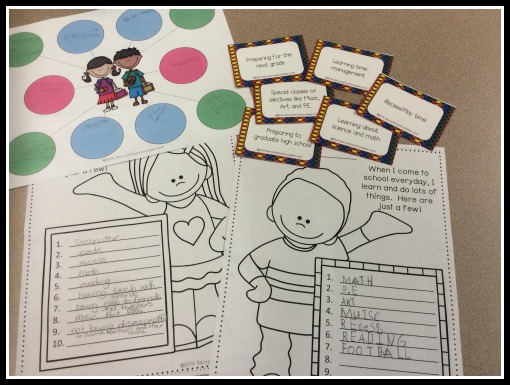
During our first session, the students brainstorm reasons why school attendance matters.  This year, I had them brainstorm on their own sheets first.  I used discussion cards to help students who couldn’t think of enough ideas for their sheets.  While we discussed the different ideas, they were free to add them to their own lists.  We concluded by filling in the bubble chart together.
Session one- School Attendance Matters Group - Savvy School Counselor
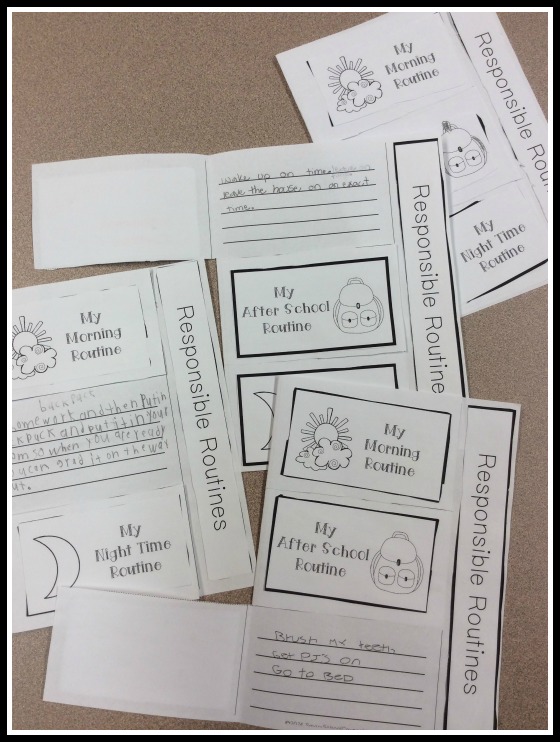
For the second session, the students made a foldable.  Inside, they wrote about Responsible Routines. After assembling the foldable with the labels, they wrote under each flap giving responsible routines for the morning, after school and at night.  This includes routines such as waking up on time to get to school, having everything ready for the next day the night before and going to bed at a decent hour.
Responsible Routines Foldable - Attendance Matters - Savvy School Counselor
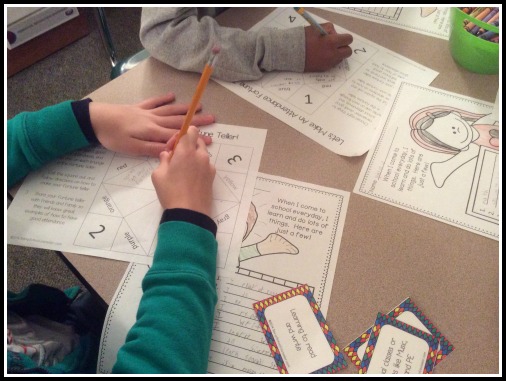
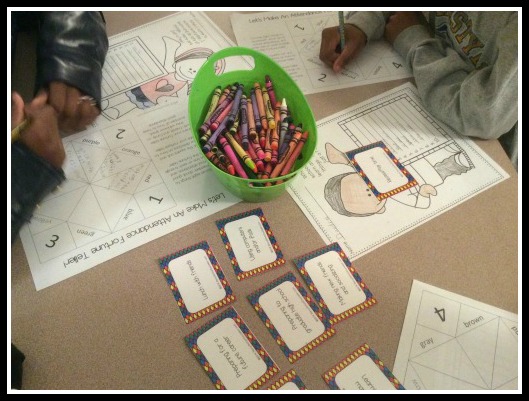
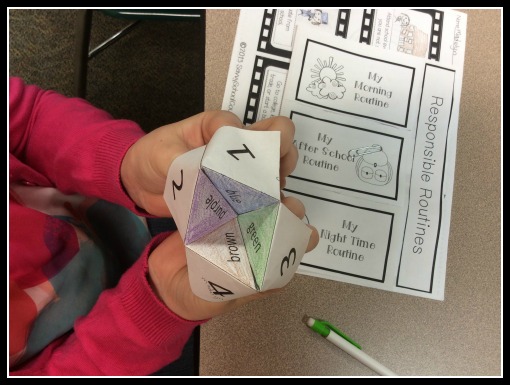
When we met for the third session, the students watched two videos about the importance of school attendance.   One video is an attendance rap and the other shows the staff at a school, along with students, talking about different reasons why it’s important to attend school regularly.  While watching, they write points from the videos that stand out to them. Afterwards, the group members share their notes. Next, we begin making  a fortune teller using information shared by the group along with the brainstorming sheets from the first session.
IMG_1259
IMG_1258
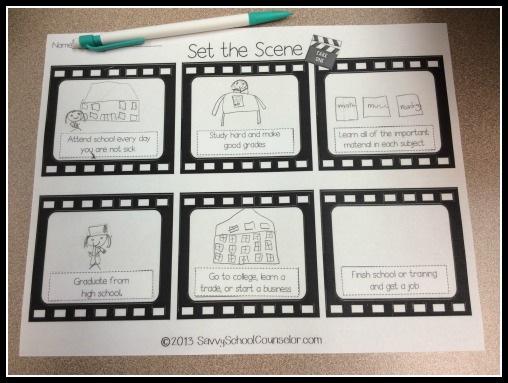
Our fourth session involves finishing the fortune tellers and completing the  “Set the Scene” activity.  “Set the Scene” allows us to discuss the path from good attendance in school to a career.  The students cut out, sequence and glue six strips in order and illustrate each on the filmstrip sheet.
Attendance Fortune Teller- Savvy School Counselor
Attendance Fortune Teller - Savvy School Counselor
"Set the Scene" - School Attendance Matters - Savvy School Counselor
During the fifth session, we play an attendance board game.  This game  includes questions about the information from the first four sessions. If there are any activities that students need to finish from previous meetings, time is allowed during this session.
When we meet for our final session, we play Roll and Respond.  Students roll a die and respond to sentence starters about attendance. Before leaving, they complete an exit ticket which reflects what they’ve learned during the small group.  They take all of their completed activities with them to share with their teachers and families.  
After we have completed the small group, I continue to keep up with the attendance patterns of each of the students when I meet monthly with the attendance committee at my school.  I will also meet again with the students to review what was learned in our small group.  Individual sessions are held with students who continue to have attendance concerns.  The good news:  This year’s attendance data for the group is looking good and is much better than what they ended the school year with last year!

Wednesday, August 15, 2012

Raising Kids Who Will REALLY Listen

Raising Kids Who REALLY Listen

When it comes to your kids, is it in one ear and out the other? Want to raise kids who really listen? Chances are you do and we’ve got a few tips that can help with this goal in mind. While this list is geared towards encouraging younger children, you can change the phrasing a bit and adapt it for older children and teens

Without further ado, here we go:

1.     Listen up! One of the strongest ways that children learn is through modeling behaviors of their parents. You knew this was coming, right?

·       When you demonstrate good listening skills in your everyday life in the presence of your kids, they will learn those skills, too. They can see how it's done by watching you.


2.     Look away from that cell phone. When you want to communicate with your child, look away from your cell phone or stop your current activity to focus completely on them. Whether they initiate the conversation or you do, stop what you're doing so you can concentrate on your interaction. You have no idea how many kids comment on the fact that their parents don’t even look at them when they talk to them. Don’t be one of those parents.


3.     Look into their eyes. In any type of communication, look in the eyes of the person you're talking to and teach your children to do the same.

·       A subtle and special connection is made when people make eye contact. You better believe it! This behavior can be taught and picked up by children as young as two years of age.

4.     Name game. When you talk to your children, saying their namewill help get their attention and set them up to be ready to listen, just like when someone calls your name, you stop what you're doing and look at them.

·       Getting your child's attention by stating his name is an effective way to prepare him to hear what you're going to say. That focus is necessary to begin to develop listening skills.

5.     Take a seat. This suggestion sends the message, "Get ready to listen because I'm going to talk."

·       When your child is very young, try leading him to a chair. Then say something like, "I'd like to talk to you for a minute," which serves as an attention-getter.

·       Once you complete what you wanted to express, be ready to listen to your child's response.

6.     Check for understanding. From time to time, ask your child what you just said. You're trying to determine what your child heard by asking him to paraphrase what you said. When he repeats it properly, praise his efforts.

·       If he doesn't get it quite right, you have an opportunity to repeat what you said for clarification and to enhance his listening skills.

7.     Praise attempts at listening. When your child shows the smallest attempt to listen or to even approach listening, it's smart to reinforce those efforts right away. This is the principle of “successive approximation”.

·       Even with a 2-year-old, you can encourage their listening skills by saying, "Thank you for sitting so quietly while Mommy was talking," or, "You were really listening to Daddy, thank you."

·       After a conversation, simple responses, such as smiling while you say, "Great job on listening," also let your kids know they exhibited the important behavior you were seeking.

Promoting your child's listening abilities is best done in small ways every single day. As a parent, you're the best role model for teaching your children communication skills. Reward their efforts with smiles and positive comments, and you're on your way to building their listening skills for a successful future.


Kristine Kilgour, M.Ed., LPSC
School Counselor & Mediator
6636 West William Cannon Drive, Suite 1627
Austin, TX 78735
512-704-5265

Monday, August 13, 2012

School Counselor Survival Kit

Ideas For Your School Counselor Survival Kit

These items will help you along the way in your career as a school counselor, whether you are a school counseling intern and have to schlep your stuff around a school, a new school counselor trying to fill an office. or a veteran looking for additional ideas.  Having your own School Counselor Survival Kit will help you on your journey.

Rubbermaid 3N83 Collapsible Cargo CrateCart on Wheels - a cart on wheels such as the Rubbermaid Collapsible Cargo Crate can make getting from place to place a breeze. I highly recommend this item! I use mine all the time to lug my stuff around, and in and out of school.
Twistable Crayola Crayon
Art supplies - You don't need to have a ton of art supplies, but I do recommend you have the basics, including crayons, colored pencils, markers, paper (lined, unlined, and construction paper).  I recommend Crayola brand, especially the twistable crayons and colored pencils.

Play-Doh 15 Count Party Bag

Play-Doh 
- Play-doh party packs are great for groups and individual sessions. I like to give kids their own play-doh so they can take it home after group. Clay is another great option; and it is typically gluten free!

Toysmith - MOODY FACE BALLS - Sold Individually - Colors may VaryStress Balls - Stress balls are helpful for teaching students about managing anger. You can get stress balls at many places for free. I have stress balls in the shape of everything from a computer to a baseball bat.  I got most of my stress balls from exhibit areas at conferences.

Stress Ball Making Supplies - If you don't mind getting a little messy, students LOVE making their own stress balls.  All you need is all purpose flour, balloons, scissors, and a funnel. For instructions check out my post, creating a stress ball.  You can also use a pool noodle to create a stress ball.


6 Pack Bubbles w/ Magic Wand 4 flozBubbles - Children and adults alike LOVE bubbles. They are great to use for teaching relaxation techniques and to help students calm down.


10 pc Animal Finger Puppet Set Titta IkeaPuppets - Finger Puppets are a great addition to your survival kit. Finger puppets are small so you can fit lots of them in your kit. Students love to act out situations or just play with the finger puppets. I have found great deals on finger puppets at  Amazon, Etsy, Ikea, Target, eBay, and Ten Thousand Villages.

Jenga - Jenga makes a great addition to a school counseling survival kit. There are many ways you can use Jenga in counseling. You can have each student ask a question as they pull out a block. It is great to talk about patience and frustration. With a colorful version of this game, you can have students pick emotions/feelings to represent each color. You can then have students talking about a time they experienced that feeling or how they could cope with that feeling when they pull the particular color.

Original UNO Card GameUno - Uno is a fun game to play with students the original way, or it can be used to talk about feelings and experiences. Allow students to pick feelings or rules for each color. Each time a someone lays down a color, they can talk about that feeling or experience. 


Portable Sand tray - One of the most used items in my office is my portable sand tray. I actually did not have this during my internships and wish I would have. It is great and inexpensive to make.  Cornstarch or cornmeal are great alternatives to sand.
 
Dinosaurs Nature Tube 18 piece playset: Assortment of Small Dino FiguresPlastic Tube Animals - Plastic tube animals work great in a portable sand tray, or by themselves. I recommend getting dinosaurs and jungle, farm, or zoo animals to start your collection. *Other places to get plastic tube animals includes: craft stores such as Michael's, Ross/T.J.Maxx/Marshalls, and department stores, and Amazon.


Plastic Mini Soldiers 144 pcArmy People - Army people are a great addition to your school counseling survival kit, especially if you create a portable sandtray. Students play out scenarios and conflict using army people. They are super cheap and you can even find them a the dollar store!

Animal Crackers - Animal crackers make a great icebreaker! I have used animal crackers in groups for new students and as ice breakers in other groups. I have students pick an animal and identify how they are like that animal. It is a fun and tasty way to for students to get to know each other. I use gluten free animal crackers made by Kinnikinnick Foods, as many children (and adults) have food allergies and intolerances. 


Basketball Hoop - An Over-the-door basketball hoop is a necessity! It is great because you can put it up wherever you go. Both boys and girls love to use my basketball hoop. I use it often in individual and small group sessions with students. Sometimes we play a game where we answer a question then make a shot. Other times, students just talk to me about what is going on for them while shooting the basketball.

100 Party Balloons - 11" Round Latex, Assortment of Solid Royal Rich Colors - Regal Purple, Regal Red, Midnight Blue, Forest Green and Lemon YellowBalloons - Balloons have a variety of uses.  Balloons can be used to make stress balls (with sand or flour), teaching students how to calm down, remembering a loved ones through a balloon release, discussing tension, etc.   


Tissues - Nothing is worse than searching for tissues when a student requests one. I like to keep tissues in my school counseling survival kit just in case.


All of the items mentioned in the School Counselor Survival Kit will help you in your role as school counselor! You do not need all of these items at once. The great thing about these items is that the majority of them are multifunctional ; so you can use them for more than one activity.

I will be updating the School Counselor Survival Kit as I think of more ideas and places to buy items. I am always on the lookout for great items to share with other school counselors!


What items do you have in your "School Counselor Survival Kit?" 
Email me with your input!

Kristine Kilgour is a Pre K-12 Certified School Counselor, Mediator, Coach, and Blogger . Contact Kristine via email or at 512-704-5265.